Gold-Tone or Gold-Plated: What the Words Tell You
Two necklaces can share a warm gold color while being made very differently. That is why “gold-tone” and “gold-plated” should not be treated as interchangeable descriptions. One describes an appearance; the other makes a claim about a surface layer.
Understanding the difference does not require choosing the most expensive material. It helps you choose with accurate expectations about the object in front of you.
Gold-tone describes the color
Gold-tone tells you that a piece has a gold-like appearance. By itself, it does not identify the underlying metal, establish a gold content or explain the finishing process. Read the separate material information if you want to know those details.
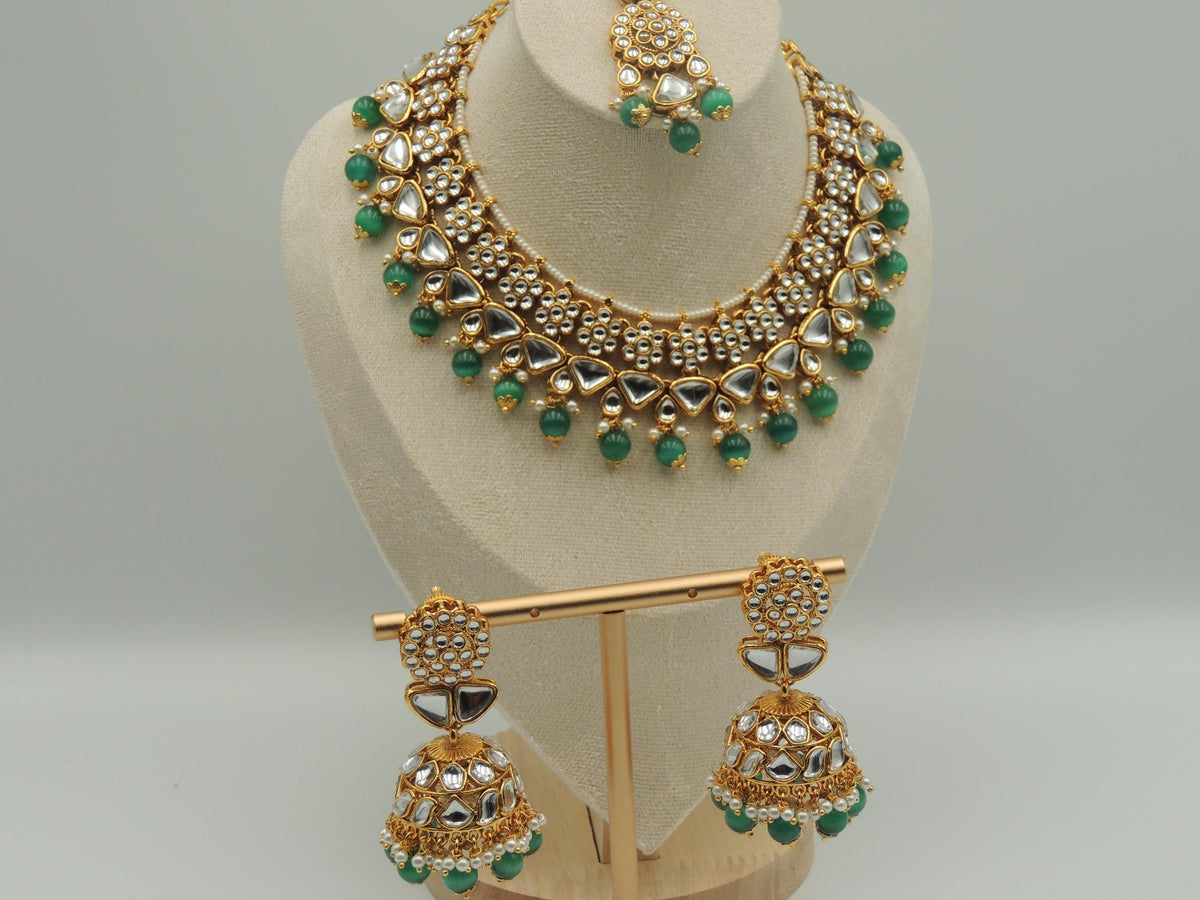
The cover photograph is a contemporary gold-colored necklace used to illustrate appearance. Its color should not be treated as a test of its composition. A photograph can help compare the warmth of a finish, but it cannot supply a missing material specification.
Gold-plated describes a layer
The Federal Trade Commission's jewelry guide explains gold plating as a layer applied to another metal. It also notes that plating can wear away, with wear depending partly on its thickness and how the item is used. Vermeil is a type of gold-plated product with a sterling-silver base.
A plated item therefore has more than one material question. What is the base? What is the surface layer? If a description answers only one, you may still need the other. The word “plated” does not mean the entire object is made from the metal named in the finish.
What does a karat number refer to?
The FTC describes karat as a measure of gold content in twenty-four parts: 18K, for example, represents eighteen parts gold combined with six parts of other metals. The important reading task is to see what the number modifies in the description.
“18K gold” and “18K gold-plated” are different statements. In the second, the karat description relates to the gold layer rather than turning the underlying object into an 18K gold item. Read the full phrase, not just the number highlighted in a title or photograph.
For the precise meaning of regulated jewelry terms and marks, use the FTC guide linked above. A short product name cannot contain all the information that belongs in a complete specification.
A finish name does not predict everything
Two pieces described with the same broad finish may differ in their base metal, coating, construction and intended care. Avoid assuming that one familiar label guarantees identical durability across different products.
The way a piece is worn also changes its contact with clothing, skin and other objects. A ring, an earring and a pendant do not experience exactly the same use. Rather than expecting one universal lifespan from a finish name, look for clear care guidance for the individual item.
If you are choosing pieces for regular wear, the Everyday Wear collection can help compare simpler designs, but simplicity of shape is not a material certification. Check the specifications of each piece you consider.
Three questions make a vague description useful
First ask for the base metal. “Metal alloy” is broad; a more specific answer may be important to you. Second ask what the finish actually is. Third ask which care instructions apply to the complete piece, including its stones, beads, adhesives or cords.
If you already know you need to avoid a particular material, make that requirement explicit instead of relying on a gold color or an unspecified “premium” label. Appearance, construction and your own requirements are separate parts of the decision.
Read the care instructions with the materials
A cleaning method suitable for one component may not suit the rest of a set. Avoid transferring advice for an unadorned precious-metal item to fashion jewelry with multiple decorative materials. The fashion-jewelry care guide explains why gentle, product-appropriate handling matters.
Keep a copy of the description and care instructions when choosing a piece. Those details are more useful later than a screenshot showing only the title and price.
Which description is better?
The better description is the accurate one. Gold-tone fashion jewelry can be a clear, intentional choice when its materials are honestly explained. Gold-plated jewelry should be described with enough detail to understand both the surface and the base. The goal is not to make every piece sound like solid precious metal; it is to know what each piece actually is.