Manga Malai: The Mango-Shaped Necklace
A manga malai is recognized by the repeated mango-shaped elements that form its necklace design. The individual curved shapes matter, but so does their relationship: together, they create a continuous rhythm around the neck.
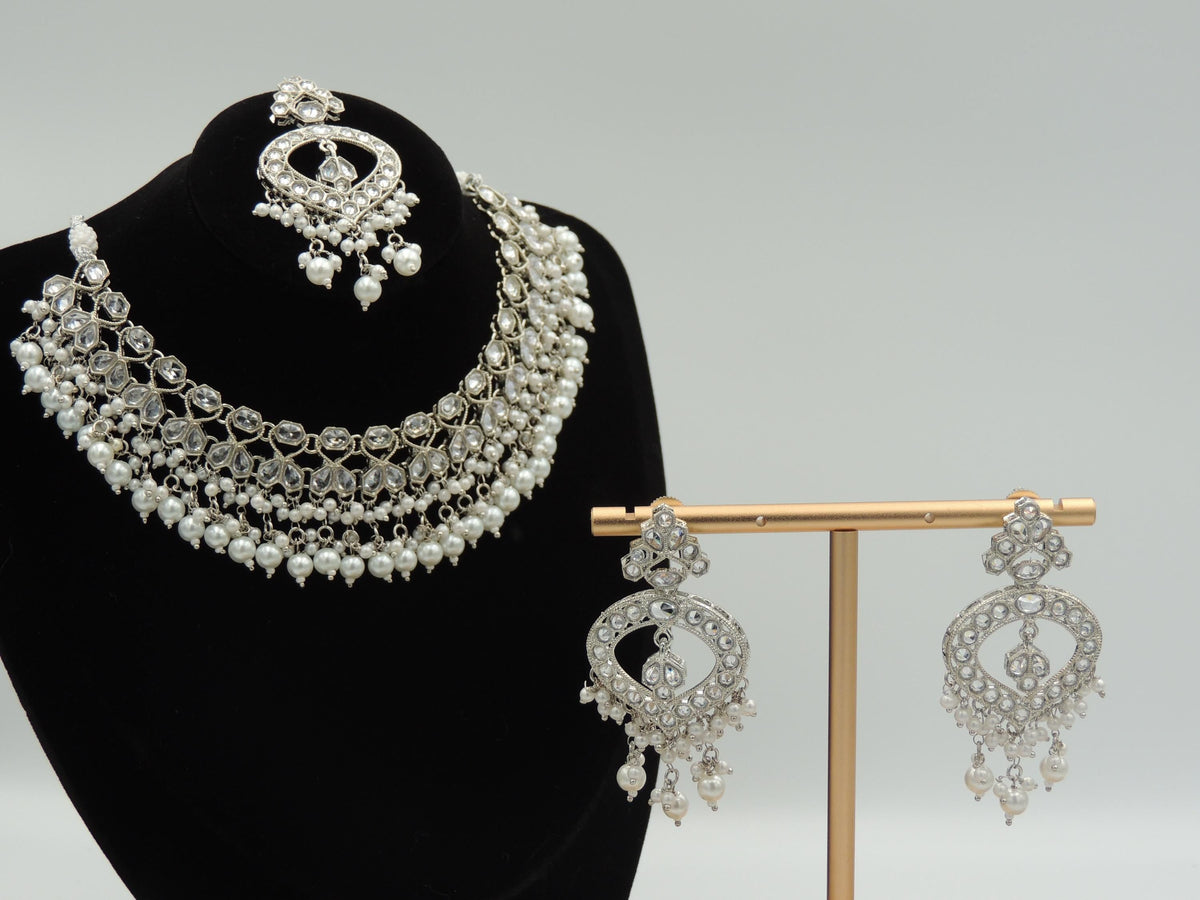
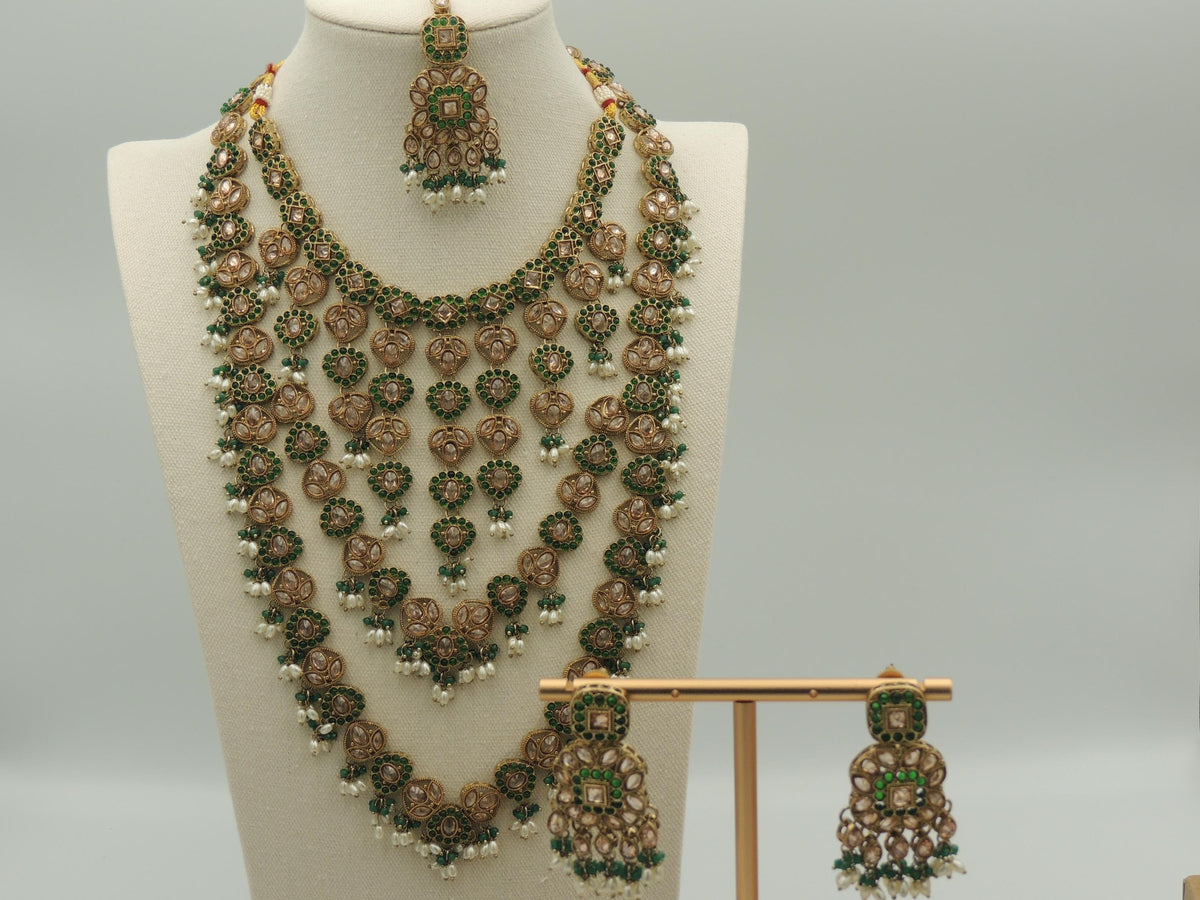
The contemporary necklace in the cover image is a comparison for spacing and repetition, not a historical manga malai. For the documented mango-shaped example discussed below, follow the National Museum collection link.
A South Indian example with forty-six elements
The National Museum's Alamkara jewelry collection includes manga malai 90.752, dated to the early twentieth century and identified as South Indian. Its record describes forty-six mango-shaped pendants with gold, rubies and white sapphires, connected through a woven cord construction.
The specific count belongs to that necklace. It is not a rule that every manga malai must contain forty-six units, use the same stones or follow identical proportions. A documented object is a starting point for understanding a form, not a template that all later jewelry must copy.
Look at the outline before the embellishment
To recognize the design, first look past the surface decoration. Follow the outside curve of each repeated element. Notice how the wider and narrower portions meet the next element, and whether the units face consistently around the necklace.
A pointed oval, a leaf and a mango-inspired curve can resemble one another in a small image. A close-up is useful because it lets you see the whole contour. If a description uses a precise traditional name, the image should give you enough detail to understand the intended reference.
Next look at the relationship between the repeated units and any central feature. Does the center interrupt the pattern or grow naturally from it? Is the lower edge even, or does it rise and fall? These choices explain why two necklaces with a similar motif can have very different character.
Repetition creates a larger shape
One small ornament may seem delicate on its own. Repeating it many times creates width, density and a strong overall line. That larger outline is what you tend to see first from a distance. The individual details become clearer when you move closer.
Try comparing photographs at two sizes. In the smaller view, assess the silhouette. In the larger view, inspect the connections and surface detail. A successful design can work at both scales, but the effect may differ: a continuous band from across a room can resolve into distinct moving elements nearby.
Do not equate more repeated units with better workmanship. A longer necklace may require more components simply because it covers a greater distance. The clarity of the pattern and the quality of its connections are separate questions from the count.
Construction affects how the necklace rests
A necklace laid flat can look more rigid than it feels when worn—or more flexible. Check whether the elements articulate independently and how they connect to the upper fastening. Ask for the actual dimensions and adjustment range if the intended position is important.
The lower outline should also be considered with the neckline. A repeated curved edge may sit wholly against fabric, partly against skin, or across both. None of these is automatically wrong, but they create different backgrounds for the shape. The neckline and necklace guide explains how to assess that meeting point.
Styling the motif without repeating everything
A strongly repeated necklace does not require every other accessory to repeat the same shape. A simpler earring can leave the necklace pattern readable; a related curved detail can create a quieter connection. Try both before deciding that a complete matching arrangement is necessary.
Compare the overall outlines of necklaces and chokers, rather than relying only on color or the number of visible stones. If the necklace is the focal point, allow enough space around it for its rhythm to be seen.
Is every mango-patterned necklace made of gold?
No. A shape describes a design, not a material. Contemporary interpretations may use different metals, finishes and decorative components. Read the actual specifications, and do not transfer the National Museum object's gold and gemstone identification to a modern piece that merely resembles it.
The most useful way to understand manga malai is to keep three things in view: the distinctive repeated contour, the construction that joins it, and the specific history of the object you are looking at.