Kundan vs. Polki: The Setting and the Stone
Kundan and polki describe different parts of a jewel. In traditional craftsmanship, kundan refers to a method of setting stones with highly refined gold. Polki describes diamonds used in a traditional, relatively flat form. A jewel can therefore contain polki diamonds held in a kundan setting: the terms are not competing names for two complete jewelry styles.
That distinction matters when a necklace looks familiar but its description is less clear. Shape, setting, gemstone and metal are separate questions. Learning to read them separately makes the craft more interesting and the product information easier to understand.
What kundan actually describes
The Victoria and Albert Museum's account of traditional Indian jewelry making explains how soft, pure gold holds stones in place. It connects kundan setting with Mughal court workshops and demonstrates the process in modern Mumbai and Jaipur workshops. The work can accommodate stones of different shapes and can be combined with enamel decoration.
Think of kundan as an answer to “How is the stone secured?” rather than “What is the stone?” A clear decorative element is not identified merely because gold-colored borders surround it. Its identity still needs to be stated.
What polki tells you—and what it does not
In its field report on Jaipur's gem and jewelry industry, GIA describes polki or flat-cut diamonds mounted in traditional kundan work. Its workshop observations include reflective foil beneath diamonds and fine gold around their edges. This combination helps explain the broad, luminous look associated with the jewelry.
“Uncut” is common shorthand, but it can obscure the preparation involved in making a diamond wearable. Do not imagine that every stone is simply picked up and placed into a necklace untouched. Nor does a polki-style outline establish that a modern piece contains diamonds at all.
Why the terms appear together
A complete necklace can bring several crafts into one object. The frame establishes the shape, the setting holds the stones, enamel adds another surface of color, and suspended beads introduce movement. A name that mentions kundan, polki and meenakari may be describing these different contributions.
The confusion begins when a technique becomes a visual shorthand. Modern fashion jewelry can echo the arrangement of stone-like shapes without using the historic materials or construction. That does not prevent the design from being beautiful; it means its description should explain what it is rather than borrow an assumption from the original craft.
A useful way to read a listing
First, find the base metal and finish. Next, look for the identity of the decorative stones or beads. Then check whether a traditional manufacturing method is actually claimed, or whether the wording says “style” or “inspired.” Finally, consider the fastening and dimensions, which tell you how the object will work on your body.
For example, “kundan-style necklace with clear glass details” describes a visual influence and a material. “Polki diamond necklace” makes a different material claim. The first should not be judged as a failed version of the second, and the second needs evidence appropriate to its claim.
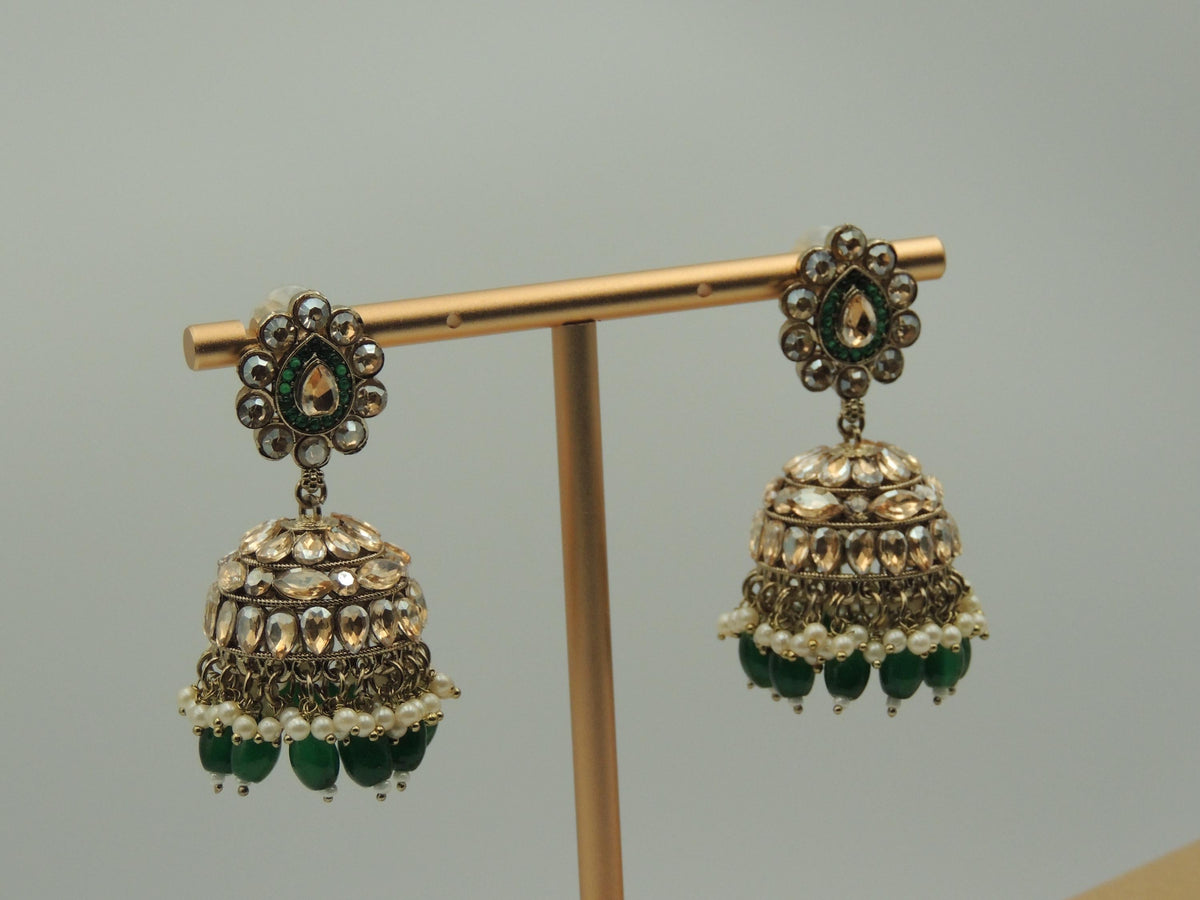
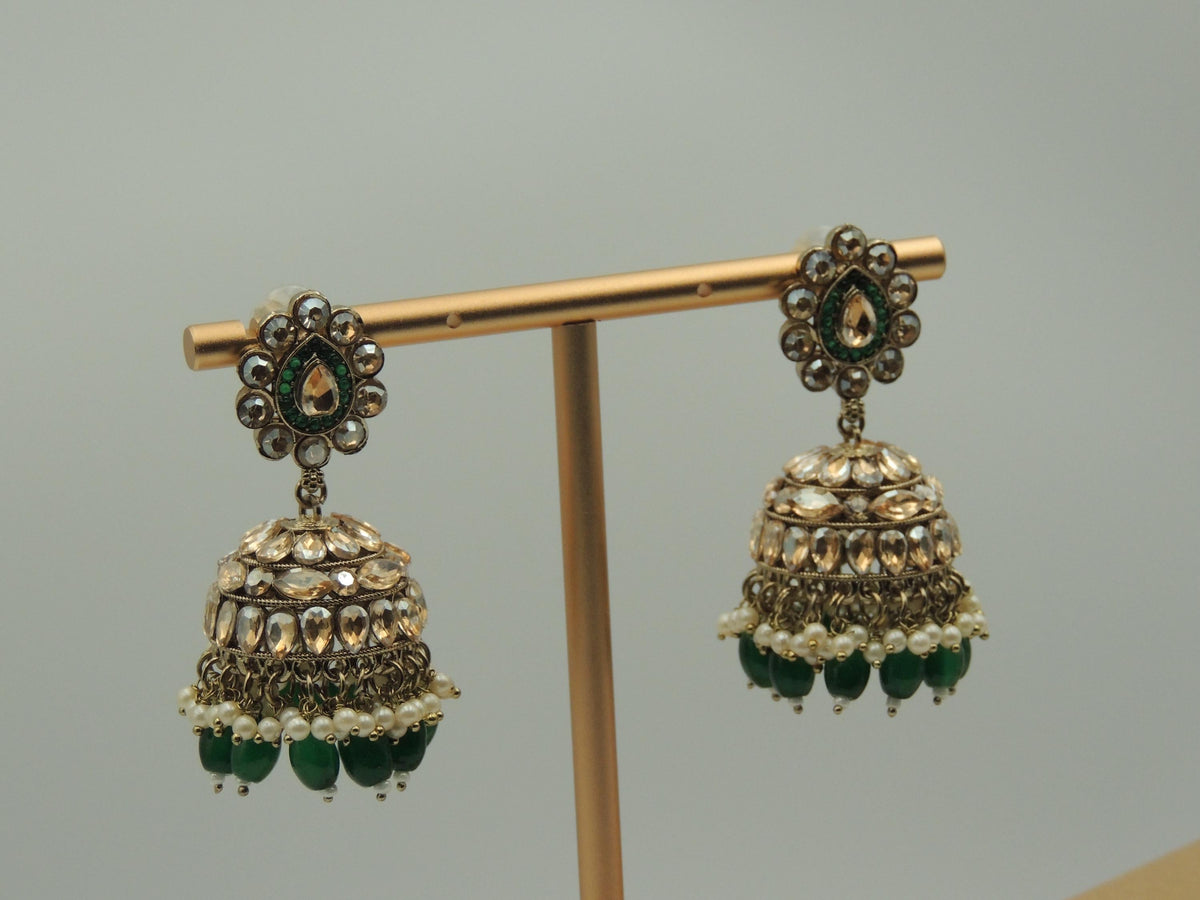
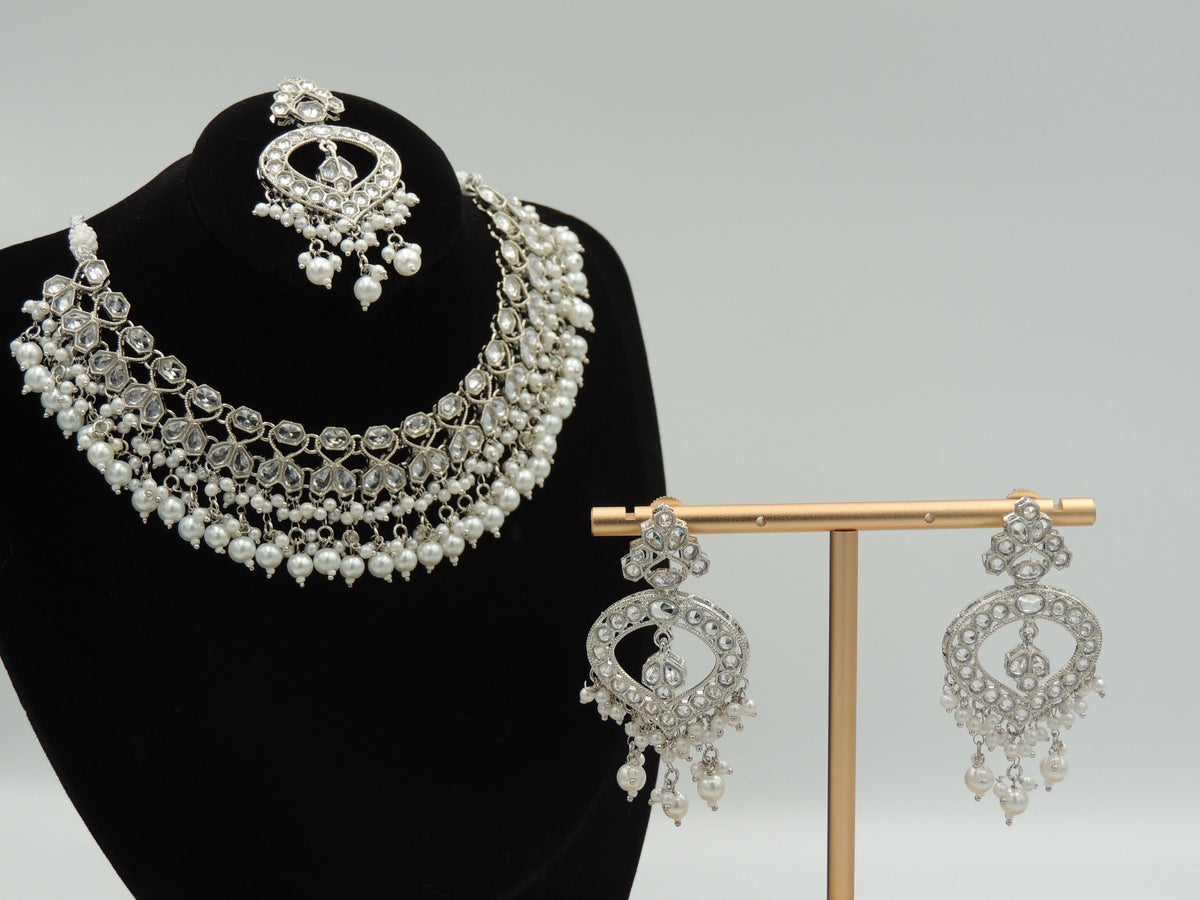
The cover photograph shows a contemporary Chamak fashion-jewelry set. It illustrates the visual arrangement discussed here; it is not a historic kundan object or evidence of polki diamonds. You can compare silhouettes in Jewelry Sets and Necklaces & Chokers, reading each piece's specifications separately.
Does one always cost more?
There is no useful price comparison based only on these two words. Materials, stone quality, construction, condition and documented provenance all matter. A genuine diamond jewel and an imitation-stone design are different objects, even if their outlines resemble one another.
Can you identify either from a photograph?
A photograph can reveal arrangement and color, but it cannot certify a stone or establish gold purity. Use images to understand the design and written specifications to understand the materials. When those disagree or leave an important question unanswered, ask before treating a style name as a guarantee.