Maang Tikka: The Forehead Jewel Explained
A maang tikka places a decorative pendant at the forehead, usually connected to a chain secured in the hair. Its defining relationship is between the ornament, the hair parting and the face. It is not simply an earring worn in a different position, and it does not automatically include the broader chains of a full head-jewelry arrangement.
When you understand the separate parts, both historical examples and modern sets become easier to read. The central ornament supplies the visual focus, while the chain and attachment determine how that focus sits.
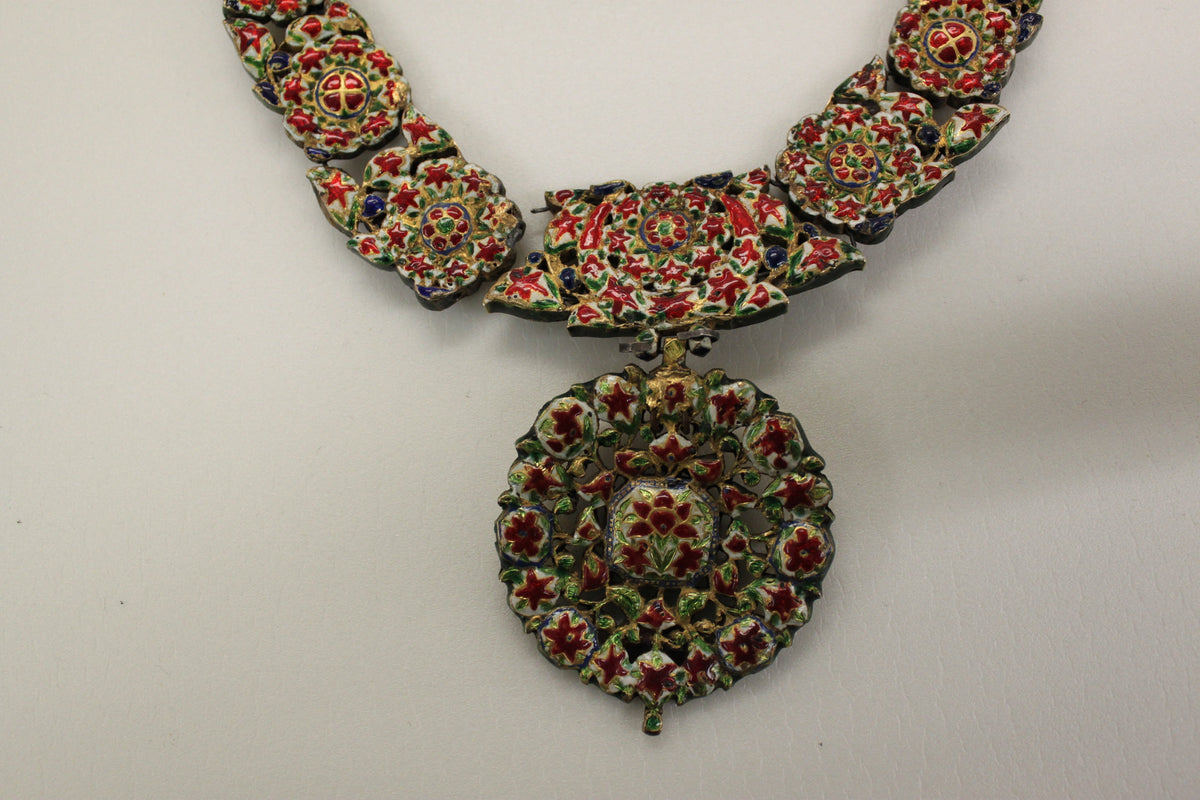
A forehead ornament in a museum collection
Qatar Museums identifies a small head jewel as a tikka and describes the forehead-pendant type as worn by girls and women from the eighteenth century onward. The record gives a documented example of the form without making every modern design identical to it.
An object record is also different from an origin legend. A surviving eighteenth-century example does not prove that one person invented all forehead jewelry at that moment. Dates attached to museum objects describe the evidence for those objects; wider traditions can require a much broader history.
Pendant, chain and attachment
Look at the pendant first. Its height and width determine how much of the forehead it occupies. Then look at the length of the chain between that ornament and its attachment. A beautiful pendant may sit too low or too high if the rest of the construction does not suit the planned hairstyle.
Finally, examine the fastening. Check whether the piece has a hook, loop or another attachment and where it can be secured. Jewelry should be supported comfortably. Pulling it tightly into place is not a substitute for an appropriate fit.
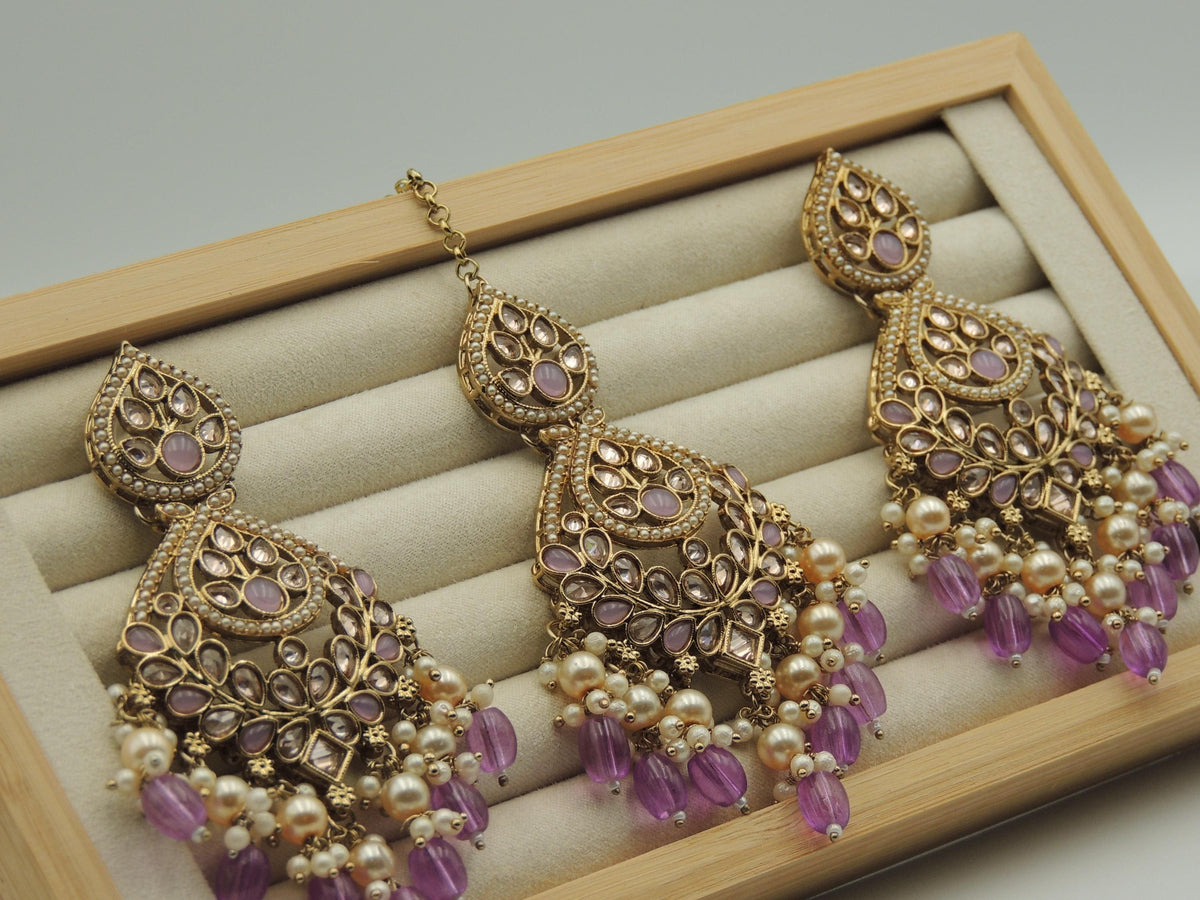
The cover photograph shows a contemporary earring and tikka set. It is not the museum object. Its coordinated pieces illustrate how a forehead pendant can repeat details from the earrings without needing to repeat the entire outline.
How it differs from other hair accessories
A central pendant is different from an arrangement that frames the forehead with additional side chains. Names and spellings vary between sellers, so use photographs and a list of included components rather than a label alone. If you want a full framing arrangement, verify that those side sections actually come with the piece.
Similarly, a side ornament or a pair of earrings with hair chains should not be treated as interchangeable with a central tikka. Consider the intended attachment points and the place where each design is meant to sit.
Plan the hairstyle before the final placement
Try the jewelry with your intended parting, hair texture and any head covering. A chain that sits neatly with one hairstyle can move differently with another. Let the person styling your hair see the actual piece, including its fastening, before the event.
If you are wearing a dupatta or veil, arrange its support separately rather than asking the jewel to carry its weight. Check the position when you turn your head or lean forward. A short fitting session gives more useful information than copying a still photograph exactly.
Balance near the face
Start with the tikka and earrings before adding a necklace. Look for clear space between the shapes. A broad forehead pendant and long earrings may already provide all the detail you want near the face, especially with embroidered clothing.
This is a styling choice, not a universal rule about weddings or who may wear an ornament. Family and community practices differ, and an individual's reason for wearing jewelry can be personal as well as ceremonial.
Does a tikka set include a necklace?
Not necessarily. The earring and tikka set guide explains how to read the included pieces. Browse Tikka Sets for coordinated examples, or Hair Accessories when comparing different arrangements.
Can its position be adjusted?
Sometimes, but the amount depends on the actual chain and attachment. Ask for dimensions and adjustment details instead of assuming that every piece can be moved to any position. The best arrangement is one that stays comfortable while allowing the pendant to be seen clearly.